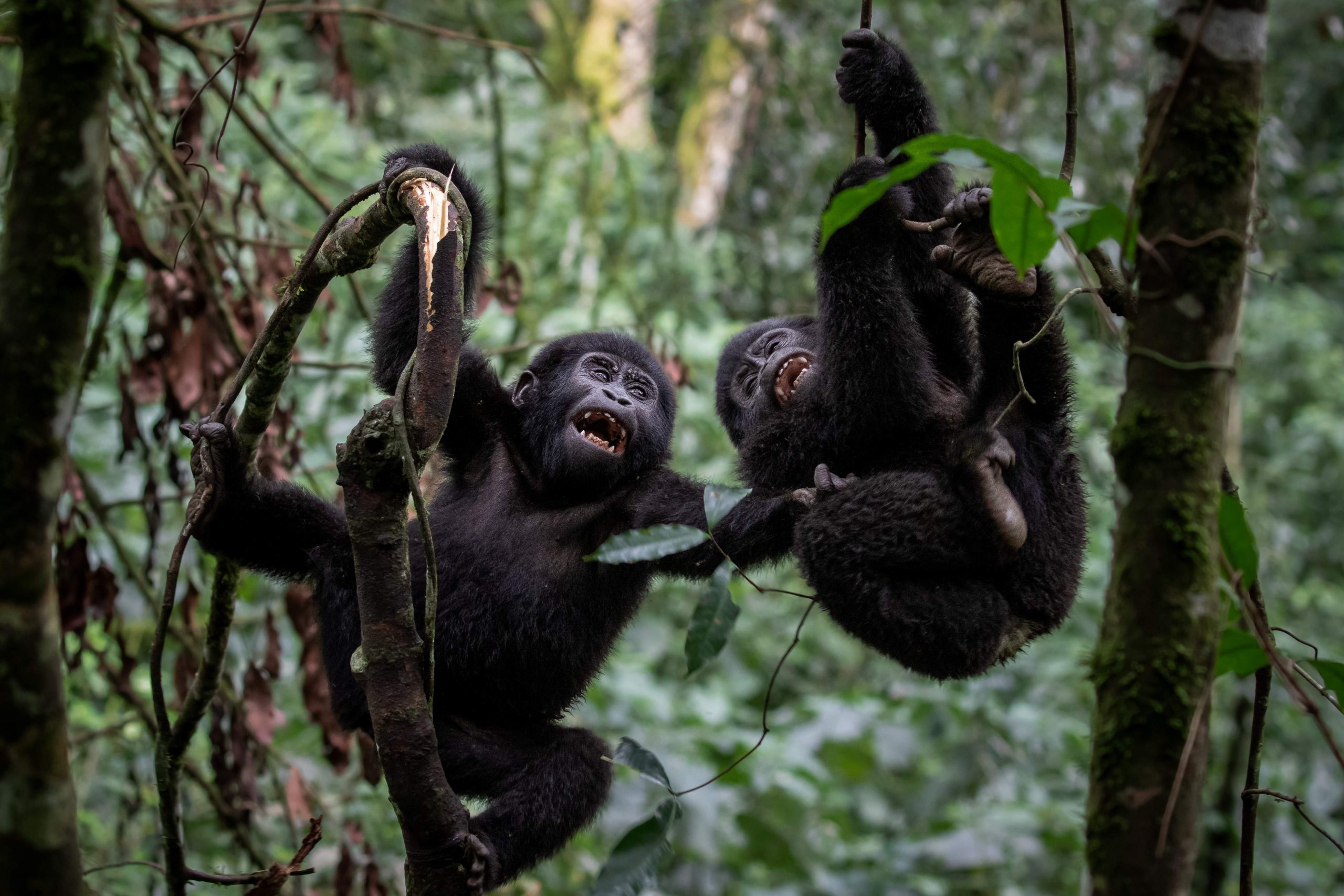
To survive, animals typically compete for resources such as food, mates, and territory. However, a groundbreaking study has revealed that chimpanzees and gorillas can form long-lasting friendships—some lasting over 20 years. These apes have been observed playing, eating, and socializing together in peaceful coexistence.
A Remarkable Discovery
This is the first study of its kind to document such long-term, peaceful relationships between different ape species. Led by Crickette Sanz from Washington University, researchers analyzed over two decades of data from Nouabalé-Ndoki National Park in the Republic of Congo.
Traditionally, both chimpanzees and gorillas are known to be territorial. Chimpanzees, in particular, have been observed attacking and even killing members of rival groups—and in rare cases, young gorillas. This makes the discovery of peaceful coexistence even more surprising and significant.
Unexpected Social Bonds
The study found that young male primates were especially curious and social, often seeking out members of the other species to play. Some juveniles even traveled significant distances alone to interact with their cross-species companions.
Remarkably, both chimpanzees and gorillas showed relaxed behavior around each other, without signs of aggression. Females with offspring also formed bonds, and interactions spanned all age groups. Chimpanzees were even seen mimicking the iconic gorilla chest-beating display, and neither species raised alarm calls during encounters.
Food-Oriented Friendships
One possible explanation for these peaceful interactions lies in shared food sources. Both species were often observed feeding together in fruit trees, particularly fig trees, which provide high-energy food but only for short periods.
Instead of competing, the apes appeared to tolerate each other—possibly because the abundance of food made conflict unnecessary. Sharing information about food sources or observing each other’s behavior may also provide advantages.
Strength in Numbers
Another key factor is predator avoidance. Leopards prey on both chimpanzees and gorillas, so having more individuals nearby increases vigilance. The study found that both species responded to each other’s alarm calls, effectively sharing information about potential threats.
This type of cooperation is not unique in the animal kingdom. Other species, such as antelope, wildebeests, and zebras, form large groups for protection. Similarly, certain monkey species collaborate to improve feeding opportunities and detect predators.
Insights into Human Evolution
These findings may offer clues about early human behavior. Ancient human species may have also formed alliances despite competing for similar resources. Evidence of interbreeding between different human species supports the idea of cooperation alongside competition.
Friendships are known to reduce stress and improve well-being in humans, raising the question of whether similar benefits exist for apes when forming cross-species bonds.
Conservation Matters
Such interactions may be more common than currently documented, as researchers often focus on one species at a time. Additionally, animals not accustomed to humans may avoid observation, limiting our understanding.
Chimpanzees are classified as endangered, while gorillas are critically endangered according to the International Union for Conservation of Nature (IUCN). This study highlights how much there is still to learn about these intelligent animals and underscores the importance of protecting their habitats.
Final Thoughts
The discovery of long-term friendships between chimpanzees and gorillas challenges our understanding of animal behavior. It reveals that cooperation and social bonding can exist even among species known for competition. Preserving these ecosystems is essential—not only for the survival of these species but also for uncovering the many mysteries they still hold.