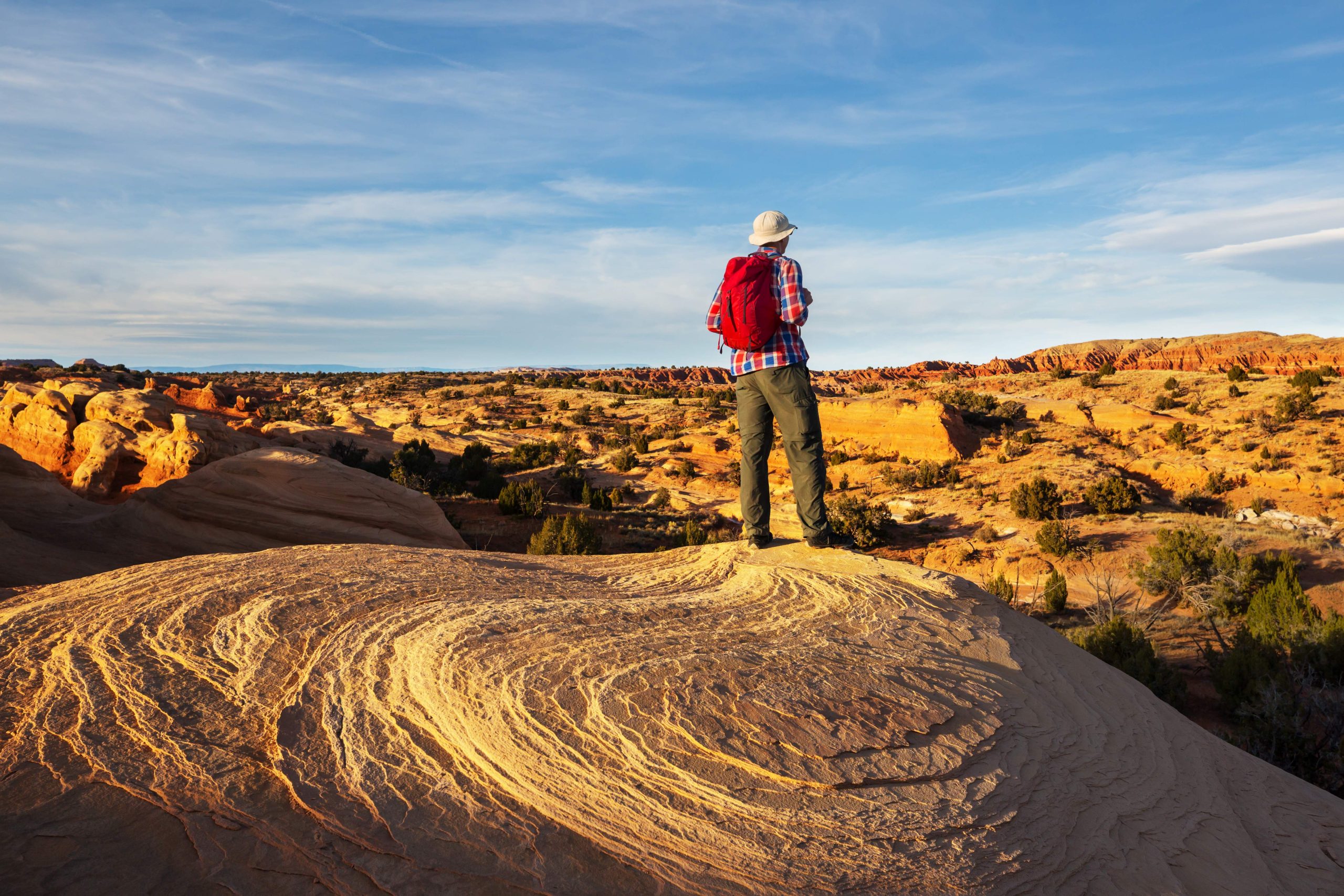
I used Vernal, Utah as my base for a fascinating walk through time. Located near Dinosaur National Monument and Red Fleet State Park, Vernal offers access to two incredible destinations that help us understand extinct ecosystems and the importance of preserving natural history.
Here, it’s possible to reconstruct an ecosystem from about 150 million years ago—and truly experience a journey into the past.
The Dinosaur Quarry of Utah
Paleontologist Earl Douglass discovered a dinosaur quarry in this region in 1909 and began excavating fossils. By 1915, the bones from the Jurassic period were preserved within an 80-acre Dinosaur National Monument, which has since expanded to over 210,000 acres.
The quarry lies within the Morrison Formation, where layers of sediment preserved fossils that now help scientists understand life on Earth millions of years ago.
The Carnegie Quarry has revealed fossils from all four Jurassic dinosaur groups—stegosaurs, ornithopods, sauropods, and theropods. Additionally, fossil pollen and spores have identified over 250 plant species from that era.
Erosion eventually exposed these fossils, leading Douglass to call it “the best-looking dinosaur site I ever found.” Excavations have uncovered remains of crocodiles, turtles, and at least 10 dinosaur species.
At Dinosaur National Monument
Although dinosaurs became extinct around 65 million years ago, their legacy lives on here. At Harpers Corner Overlook, visitors can stand on ancient ocean fossils now perched high above the Green River—showcasing how dramatically landscapes have changed over time.
The Quarry Exhibit Hall
One of the most impressive highlights is the Wall of Bones inside the Quarry Exhibit Hall. Accessible via shuttle from the Quarry Visitor Center, this display features over 1,500 exposed dinosaur bones.
Among the discoveries are the neck and skull of a Camarasaurus, leg bones of Diplodocus and Apatosaurus, a Torvosaurus tooth, and a well-preserved Allosaurus skull. Visitors can even touch some of these ancient fossils—an unforgettable experience.
Fossil Discovery Trail and Beyond
After exploring the exhibit hall, the Fossil Discovery Trail offers further insights into prehistoric life. Driving deeper into the monument reveals ancient petroglyphs believed to be around 1,000 years old, showing that humans have long been part of this landscape as well.
Visiting Red Fleet State Park
Next, I visited Red Fleet State Park, known for its striking red sandstone formations resembling a fleet of ships. However, the real highlight was its dinosaur tracks.
These footprints, formed about 150 million years ago, can be reached via a hiking trail or a short boat ride across the reservoir. I chose the boat route and saw several well-preserved three-toed tracks. Adding water to the prints made them more visible for photographs.
Some tracks lie along the reservoir’s edge and may be hidden when water levels rise.
Exploring Vernal, Utah
Vernal proudly embraces its identity as “Dinosaurland.” A pink dinosaur statue greets visitors, and life-sized dinosaur replicas can be found in the Dinosaur Garden outside the Utah Field House of Natural History State Park Museum.
Inside the museum, exhibits showcase geological history, fossil preparation labs, and even interactive fossil digs, offering an engaging experience for visitors of all ages.
During my visit, I even received a playful Dinosaur Hunting License—though I prefer hunting with a camera! The license humorously allows visitors to “hunt” specific dinosaur species, making the experience even more memorable.
Final Thoughts
A visit to Vernal and its surrounding attractions is truly a journey through time. From ancient fossils and dinosaur bones to prehistoric footprints and human history, this region beautifully captures the story of life on Earth. It’s an unforgettable destination for anyone fascinated by history, nature, and discovery.